This blogpost is going to be brief and to the point. There are many Benefits and Advantages to registering your business and incorporating your company. In my opinion, these far outweigh the disadvantages.
1. You can protect your personal assets by incorporation
Incorporation is one of the best ways you can protect your personal assets such as your home, cars, or savings. A limited liability company can own property, carry on business, incur liabilities, and sue or be sued. As a separate legal entity, a company is responsible for its own debts. That means creditors of a corporation generally, in certain circumstances, can seek payment only from the assets of the corporation and not from the personal assets of the directors and shareholders. Sole traders, however, face unlimited liability for both personal and business assets even if they are registered.
2. Raising Capital
Incorporated companies and registered businesses generally have a better outlook when it comes to raising capital. Incorporated companies can issue shares of stock and access commercial loans. In most cases, banks seem to prefer to lend money to registered and incorporated entities rather than to ones that are not. In Trinidad and Tobago these registered businesses and companies can access commercial mortgages, working capital financing, revolving lines of credit, term loans, trade finance as well as reverse factoring from various financial institutions. Some financial institutions also offer advisory services to registered and incorporated entities at no additional cost.
3. Perpetual Existence for incorporated entities
An incorporated entity has perpetual existence. The company exists until its shareholders, its owners, decide to end it. So, if all the officers, managers, directors and shareholders change, the company can still exist. It is the most enduring business typology. It lends itself to stability which is attractive to investors and allows for long term planning and strategising.
4. Credibility and reliability
The fact that your business is registered or incorporated would lead your customers, suppliers and business partners to see your business as more reliable and stable than unregistered or unincorporated entities. Registration and incorporation convey credibility, permanence and in a sense, trustworthiness and even professionalism, to your venture. In Trinidad and Tobago your business has to be registered or incorporated in order to set up bank accounts and to qualify for other forms of assistance and facilities, not to mention the fact that registration and incorporation are matters of statutory compliance in some jurisdictions.
5. Anonymity of owners
An incorporated company may give some form of anonymity to its owners. Sole Traders of course do not have this benefit. A company’s owners may be able to prevent their involvement in the company from being public information and protect themselves, to some extent, from public scrutiny.
The UNWOMEN’s IWD theme for 2022 is “Gender Equality Today for a sustainable tomorrow.”
Source: Burcu Kölelifor UN Women (2022)
It should be noted that the UN theme for International Women’s Day is aligned with the priority theme for the upcoming 66th Commission on the Status of Women (CSW66): “Achieving gender equality and the empowerment of all women and girls in the context of climate change, environmental and disaster risk reduction policies and programmes”.
Save the date:
The United Nations Observance of International Women’s Day under the theme, “Gender equality today for a sustainable tomorrow”, will be marked by a high-level virtual (TBC) event on Tuesday, 8 March 2022, 10–11.30 a.m. EST.
The International Women’s Day website is celebrating it’s IWD 2022 campaign theme: #BreakTheBias
“A world free of bias, stereotypes, and discrimination. A world that is diverse, equitable and inclusive. A world where difference is valued and celebrated. Together we can forge women’s equality. Collectively we can all #BreakTheBias.” (internationalwomensday.com)
International Women’s Day will be celebrated on March 8, 2022.
Many of you may be familiar with the term International Women’s Day and you may have even seen persons making speeches or having walkathons in celebration or observance of this day but you may like many others remain largely unfamiliar with its genesis and its purpose.
A Brief History
International Women’s Day (IWD as it’s known) grew out of the labour movement in the United States. It reportedly began in 1908, when 15,000 women marched through New York City demanding better working conditions and voting rights.
Clara Zetkin, the Leader of the ‘Women’s Office’ for the Social Democratic Party in Germany, is credited with making this movement international when she suggested the idea at the 1910 International Conference of Working Women in Copenhagen. The women attending this conference came from 17 other countries and agreed to adopt the idea. Thus in 1911 the very first international women’s day was observed in Austria, Denmark, Germany and Switzerland on 19 March. Clara, however, never suggested a set a date for the observance, this came much later in the decade, in 1917.
During World War I, on February 23, 1917, Russian women began a strike for “bread and peace” in response to the death of over 2 million Russian soldiers in the War. They continued their strike despite major political opposition, four days after they began their strike the Czar abdicated and the provisional Government granted voting rights to women. The date they began their strike was Sunday February 23 of the Julian calendar which was March 8 on the Gregorian calendar which was used in other countries. Thus the date for the celebration of International Women’s Day became March 8.
The United Nations (UN) began observing IWD in 1975. In December 1977, the UN General Assembly adopted a resolution proclaiming a United Nations Day for Women’s Rights and International Peace to be observed on any day of the year by Member States. The colours of IWD are purple, green and white.
The International Women’s Day website states that IWD is an official holiday in many countries including Afghanistan, Armenia, Azerbaijan, Belarus, Burkina Faso, Cambodia, China (for women only), Cuba, Georgia, Guinea-Bissau, Eritrea, Kazakhstan, Kyrgyzstan, Laos, Madagascar (for women only), Moldova, Mongolia, Montenegro, Nepal (for women only), Russia, Tajikistan, Turkmenistan, Uganda, Ukraine, Uzbekistan, Vietnam and Zambia.
Why do we still need to observe and celebrate IWD?
International Women’s Day is a day celebrating the social, economic, cultural and political achievements of women. The day also marks a call to advocacy and action for accelerating gender parity.
Despite many prevailing opinions Gender equality has not been achieved internationally or locally. Women are still suffering from the effects of gender inequality despite the large gains over the past century. Women still receive unequal pay, are in fewer leadership positions, enjoy unequal access to education, healthcare, employment opportunities or training. Indeed, women are still more likely to become victims of violence and self harm due to poor body image. Women are also more likely to suffer from poverty especially if they are women of colour.
As if these issues were not enough the COVID-19 pandemic has pushed into the spot light issues of gender inequality present in our very own society. With the advent of the COVID-19 pandemic, the shadow pandemic (according to the UN) of increased violence against women and girls and domestic violence, has arisen at an alarming rate as women were now forced to be confined with their abusers due to the pandemic lockdowns and restrictions. The UNWomen reports that the Trinidad and Tobago Police Service Crime and Problem Analysis Division observed a “78% year-on-year increase in domestic violence reports between March and August 2020“. While the months of “May, June and July 2020 saw staggering upsurges of 113%, 149% and 132% respectively Trinidad and Tobago”.
The pandemic also brought along with it an economic pandemic which disproportionately affected women. Women were more likely to loose their jobs than men. Women were also more likely than men to have to continue working while shouldering a greater share of household duties and increased amounts of unpaid care work including homeschooling of children, cooking, cleaning and caring for sick and/or elderly relatives during the pandemic. UNWOMEN reports that 54% of women as opposed to 47% men saw an increase in unpaid domestic work while 46% of women as opposed to 35% men saw an increase in additional child care duties.
In the early days of the pandemic the IDB reported that 70% of households in Trinidad and Tobago reported reduced income. Women in the informal sector in a number of Caribbean countries were reported to have suffered from job loss more than men. UNWOMEN also reports that the percentage of households with incomes below the country-specific minimum wages spiked in Trinidad and Tobago by 35 percentage points. The enforcement of school closures, stay at home orders and lockdowns led to even greater reduction in income and further job losses by those in vulnerable industries (such as tourism, entertainment) and the informal sector.
Achieving Gender Equality requires the engagement of women and men, girls and boys. It is everyone’s responsibility.
Ban Ki-Moon
If nothing else, the foregoing points should illustrate the extent to which gender equality is still a work in progress. IWD provides an opportunity for our societies to step back and consider the state we find ourselves in and to examine what that remains to be done to move us closer to that illusive goal of gender equality.
The UN Sustainable Development Goals 2030, Sustainable Development Goal #5 Gender Equality, seeks to, inter alia, end all forms of discrimination and violence against women and girls, to ensure women’s full and effective participation and equal opportunities for leadership at all levels of decision-making in political, economic and public life, and to undertake reforms to give women equal rights to economic resources, as well as access to ownership and control over land and other forms of property, financial services, inheritance and natural resources, in accordance with national laws.
By celebrating IWD we also come closer to achieving the targets set under SDG5 by focusing in an incremental, progressive way on different aspects of the goal. Only sustainable action and consistent collaboration between governments, civil society and all citizens can contribute in a meaningful way to the achievement of the SDGs and the realisation of the ideals of IWD.
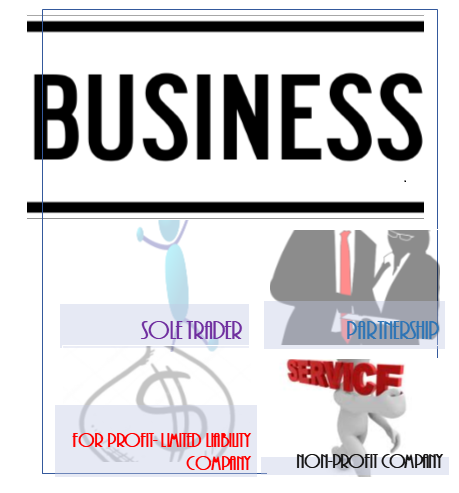
In Trinidad and Tobago one can open various types of businesses, this list includes but is not limited to a sole trader/sole proprietorship, a for profit company, a non-profit company and partnerships.
Two of the most common types of business that we encounter in Trinidad and Tobago are the sole trader and limited liability (for profit) company. Your choice of business depends on your personal goals and resources.
Sole Traders
Many self-employed persons opt to register their business as a sole trader. A sole trader is the simplest and most cost effective form of a business that you can register. You don’t need to be an attorney or accountant to do so, the process has become increasingly simplified at the Companies Registry and you may opt to do it yourself if you have the time, resources and patience to do so. As a sole trader you will be legally responsible for all aspects of the business. You’ll generally make all the decisions about all aspects of running your business.
There are a number of advantages:
You have complete autonomy with business decisions
You have fewer reporting responsibilities
It’s easy to change your business structure as circumstances dictate
One major disadvantage involves that of liability, as a sole trader you are responsible for all liabilities of the business. Your liability is unlimited inclusive of your personal assets and jointly-owned assets such as a home or vehicle.
On average, the registration of a sole trader business in Trinidad and Tobago could take a few days with the new Companies Registry Online System – CROS (which I will discuss later on in the blog) once your name search is done correctly and the name you’ve selected has been approved for subsequent registration. A point to note, the name you select must be thoughtfully selected and must not be inflammatory, convey some illegality or duplicate the name of a previously registered or incorporated business. My advice: conduct a thorough name search!
For Profit – Limited Liability Company
A for profit business on the other hand is one that, in most instances, people opt to incorporate as a limited liability company or LLC. A LLC has a number of advantages, its owners are not personally liable meaning that their personal assets are protected and the company has its own corporate identity. The company can perform actions in its own name such as opening its own bank accounts, purchasing property and other assets such as vehicles. A company can also be sold or passed on.
There are however a number of disadvantages as well, there is reduced control and there may be disputes among owners on how to manage and run the company. The accounts for such a company would be more complex and the services of an accountant would most likely have to be retained and you would have to determine how to take out your earnings from the company.
If you do decide to set up such a business you would have to decide on a suitable company name, the registered address of the company, name at least two (2) directors including a secretary, and determine the details of the company’s shares and decide on the articles of incorporation and file annual returns thereafter. The incorporation process could generally take a few days, or even less, once your name search and reservation are completed in a timely manner, all your documents are in order and there are no queries on the application. This incorporation process can now be done via the CROS.
After a business is registered or incorporated one has to consider the tax requirements. In Trinidad and Tobago the Inland Revenue Division of the Ministry of Finance is the competent authority that handles these matters. I’ve attached the following link from the Ministry of Finance which provides guidance on VAT Registration .
A bit about the CROS
The registration of businesses and company incorporation are now only available online. The MAGLA has launched its new Companies Registry online system or CROS , I’ve had the opportunity to use this online method of company incorporation, in my experience there are some operational hiccups and the process is a bit convoluted.
As a service provider myself, registering for the online facility to provide the online service to my clients was a bit time consuming, to start you have to apply for a Companies Registry Account (CRA) Account and then jump through a few other hoops to ensure that you could conduct business for your clients. Payment is not yet available using credit cards online, so one still has to go in to the Ministry to top up one’s CRA online account. In the end the convenience of being able to do some things such as company searches etc online can be said to outweigh the initial hassle.
The Digital Divide
After discussing these changes with my father, I feel moved to say one thing about this warp speed movement towards the wholesale adoption of ICTs as the only means of conducting some forms of business. Those in authority must be mindful that there are large number of persons in our society that still do not have access to the internet and are not computer literate. Are these persons going to be seen or ignored as collateral damage and simply left behind by the wholesale adoption of these ICT tools and thereby become effectively disenfranchised by these developments? This discussion brings to mind the debate on the digital divide … I’ll write more about these concerns in another blog post.
When all is said and done, if a business is what you want to start, if you have some burning entrepreneurial goal or vision for yourself or your family: go for it!
If, however, you find the process to be too much, too timely or too frustrating for you handle there are many service providers, who will complete the entire process for you.
I’ve included some useful links below for your ease of reference.




 Phoenix Legal and Consulting Services