In today’s rapidly evolving business landscape, the call for diversity and inclusivity isn’t just a moral imperative; it’s a strategic necessity. Among the crucial facets of diversity, the representation of women in leadership positions stands out as an area that demands urgent attention. While progress has been made over the years, the journey towards achieving gender parity in leadership roles remains incomplete. It’s time for organizations to recognize the immense value that women bring to the table and actively work towards fostering an environment where they can thrive.
Diversity in leadership isn’t merely about ticking boxes or meeting quotas; it’s about harnessing the full spectrum of talent and perspectives to drive innovation and sustainable growth. Research consistently underscores the benefits of gender-diverse leadership teams, from enhanced decision-making to improved financial performance. By leveraging a diverse range of viewpoints, organizations are better equipped to anticipate market trends, navigate complex challenges, and capitalize on emerging opportunities.
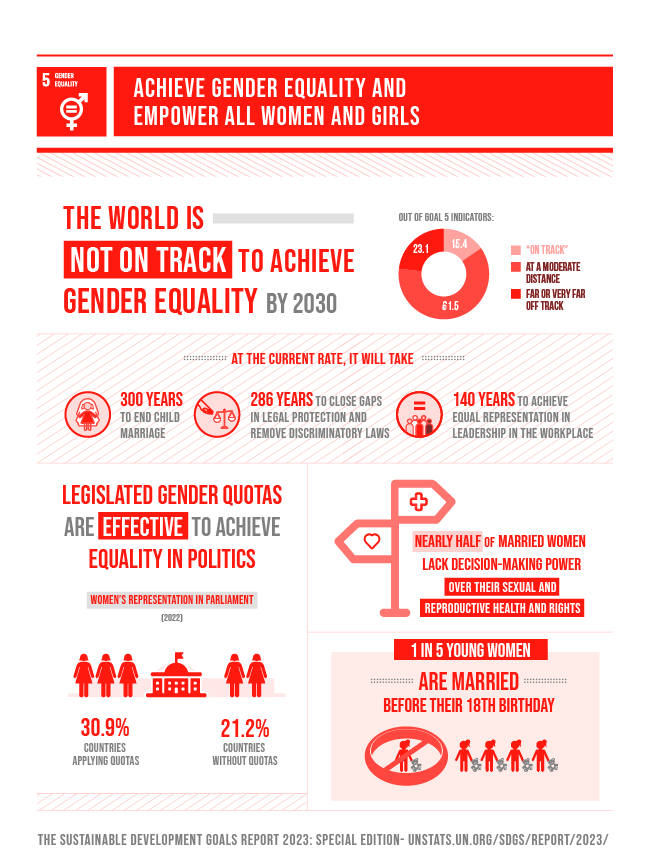
Yet, despite the compelling business case for gender diversity, women continue to be underrepresented in leadership roles across various industries. Take look at the UN SDGs, in particular, the progress we have not made as a civilisation towards the achievement SDG 5, Gender Equality. According to the UN, we are 140 years away from achieving equal representation in leadership in the workplace, note that “globally women held only 28.2% of management positions in 2021 (up just 1% since 2015), although they accounted for almost 40% of total employment.” (UN Dept of Economic and Social Affairs, 2023).
Structural barriers, unconscious biases, and entrenched stereotypes often hinder their progress, creating a persistent gender gap in the upper echelons of organizations. Addressing these barriers requires a multifaceted approach that encompasses policy changes, cultural shifts, and targeted initiatives aimed at empowering women throughout their career journeys.
One of the primary drivers of change lies in fostering inclusive workplace cultures where women feel valued, respected, and supported in their professional aspirations. This entails creating opportunities for mentorship, sponsorship, and leadership development programs tailored to the unique needs and challenges faced by women. By providing avenues for skill enhancement, networking, and career advancement, organizations can cultivate a pipeline of talented female leaders poised to take on senior roles.
Moreover, it’s crucial to challenge traditional notions of leadership that may inadvertently favor certain attributes or behaviors over others. Leadership isn’t a one-size-fits-all concept; it encompasses a diverse array of styles and approaches. Embracing this diversity not only enriches organizational culture but also fosters a more inclusive and equitable environment where individuals are valued for their unique contributions rather than conforming to narrow stereotypes.
Beyond internal initiatives, organizations can also play a pivotal role in driving systemic change by advocating for policies and practices that promote gender equality at the societal level. This includes initiatives such as pay equity, parental leave policies, and flexible work arrangements that enable women to balance their professional and personal responsibilities effectively. By championing gender-inclusive policies both within and beyond their own walls, organizations can contribute to creating a more equitable society where women have equal opportunities to thrive.
In conclusion, the imperative of having more women in leadership positions isn’t just a matter of fairness; it’s a strategic imperative that can drive organizational success in an increasingly complex and interconnected world. By fostering inclusive cultures, challenging stereotypes, and advocating for gender equality both internally and externally, organizations can unlock the full potential of their talent pool and pave the way for a more prosperous and sustainable future. It’s time to break down the barriers that hold women back and unleash their power as leaders, innovators, and change agents. The time for action is now.
As we step into a new year, the digital landscape continues to evolve, offering both opportunities and challenges. With the increasing prevalence of online transactions, it’s crucial to be vigilant against the rising tide of online scams that threaten our financial security. I’ve had my own credit card skimmed (and ‘maxed out’) when a major department store in the USA suffered from a cyber-attack and had their databases breached and I’ve had a number of clients regale me with stories of how their financial security had been breached over the past months so I decided to post some simple suggestions on how to avoid these experiences that anyone can implement whether they are an IT expert or ‘not so expert’, like me.
In this blog post, I’ll explore some simple but essential tips and strategies to protect yourself from falling victim to online scams in the new year.
Stay Informed:
The first line of defence against online scams is knowledge. Stay informed about the latest scams circulating the internet. Scammers are adept at adapting their techniques, so being aware of current trends can help you recognise and avoid potential threats.
A strong password is your first line of defence. Create complex passwords that combine uppercase and lowercase letters, numbers, and symbols. Avoid using easily guessable information such as birthdays or names. Additionally, use different passwords for each online account to prevent a domino effect if one account is compromised. Do not share your passwords or have them written down anywhere that other persons could potentially find them and breach your accounts.
Enable Two-Factor Authentication (2FA):
Two-factor authentication adds an extra layer of security by requiring a second form of verification, such as a code sent to your mobile device, in addition to your password. Enable 2FA wherever possible to enhance the security of your online accounts.
Verify Website Security:
Before entering any personal or financial information online, ensure that the website is secure. Look for “https” in the URL, indicating a secure connection. Additionally, check for a padlock icon in the address bar, signalling that the website uses encryption to protect your data.
Be Cautious with Emails and Messages:
Phishing remains a prevalent method for online scammers. Be skeptical of unsolicited emails or messages that prompt you to click on links or provide personal information. Verify the sender’s legitimacy before taking any action and avoid clicking on suspicious links. Do not fall for any scams telling you that you’ve won a lottery or that you have a bill payment pending for a service you do not recognise. Never share your password.
Update Software Regularly:
Keep your operating system, antivirus software, and other applications up to date. Software updates often include security patches that address vulnerabilities, making it more difficult for scammers to exploit weaknesses in your system.
Carefully guard access to your debit and credit cards.
Do not allow unauthorised use of your cards. Secure your cards at all times to avoid skimming or having them stolen. When you use them to pay do not allow anyone to walk away with your card or to see your pin when you’re entering it. Always remain vigilant.
8. Monitor Your Financial Statements:
Regularly review your bank and credit card statements for any unauthorised transactions. When I say regularly I mean daily. Promptly report any discrepancies to your financial institution to prevent further unauthorised access. I also like to keep a handwritten or daily electronic log of all my transactions.
Be Wary of Investment Opportunities:
Be cautious when approached with unsolicited investment opportunities or financial schemes promising high returns. Conduct thorough research before committing to any financial arrangement and consult with a trusted financial advisor if needed.
Conclusion:
As we navigate the digital landscape in the new year, it’s crucial to prioritise our online security. By staying informed, using strong passwords, enabling two-factor authentication, verifying website security, being cautious with emails, updating software regularly, protecting your cards, monitoring financial statements, and exercising caution with investment opportunities, we can significantly reduce the risk of falling victim to online scams. Remember, an ounce of prevention is worth a pound of cure when it comes to safeguarding your finances in the digital age. Stay vigilant, stay secure, and have a safe and scam-free new year!
As we begin this new year, we want to take a moment to extend warm wishes to our present clients and a warm welcome to all the new clients who are joining us. We are excited to have you as part of our community and we want to assure you that you have made the right choice by choosing us.
Our team is highly knowledgeable and experienced and we take pride in providing our clients with the best possible services and solutions to their problems. Whether you are starting a new business or seeking legal advice, we are here to assist you every step of the way.
We understand that seeking assistance can be daunting, but we want you to know that we are approachable and empathetic. We will listen to your concerns and work with you to develop a customized plan that is tailored to your unique needs. Our aim is to make the process as smooth and stress-free as possible for you.
We are confident that you will find us to be not only professional, but also kind and compassionate. We are here to support you and help you achieve your goals.
And, we promise, we won’t forget to add a touch of intelligent humour along the way.
So, welcome again to our community! We are excited to have you with us and we look forward to working with you.
Let’s make 2024 a year of growth, success, and happiness!
New Year’s resolutions are not just for individuals, but also for businesses looking to start the year off strong. In this post, I will highlight some resolutions that small businesses can make to improve their operations and grow their bottom line.
One resolution that small businesses can make is to improve their online presence. In today’s digital age, having a strong online presence is crucial for success. This can include updating your website, creating social media accounts, and optimizing your search engine ranking. By doing so, you can reach a wider audience and attract new customers.
Another resolution that small businesses can make is to focus on employee development. Investing in your employees can lead to increased productivity, job satisfaction, and loyalty. Budget permitting, consider offering training, professional development opportunities, and performance incentives to help your employees grow and succeed in their roles. These training programmes could be as simple as providing access to relevant paid online training from sources such as Udemy or Coursera.
Small businesses can also resolve to prioritize customer service in the new year. Happy customers are the backbone of any successful business, and by providing excellent customer service, you can build a loyal customer base and attract new business through word-of-mouth referrals.
Small businesses can also resolve to improve their financial management in the new year. This can involve creating a budget, regularly tracking expenses and income, and exploring ways to increase revenue and reduce costs. By having a solid financial plan in place and using the relevant IT tools, small businesses can make more informed decisions and have a better understanding of their overall financial health.
Another resolution that small businesses can make is to give back to their community. This can involve supporting local charities, participating in community events, or even just being a good neighbour. By being an active member of your community, you can strengthen relationships and build goodwill, which can ultimately benefit your business in the long run.
In conclusion, the new year is a great time for small businesses to set goals and resolutions for the upcoming year. By improving your online presence, investing in employee development, and prioritizing customer service, you can set your business up for success in the new year and beyond. Here’s to a prosperous and fulfilling year ahead!
Law is not my first profession nor do I think it will be my last. I’ve always been intrigued by the law and the role it plays in society. I love the fact that law is not a static subject or profession, it is always engaging with, changing, adapting to and treating with the dynamic world within which we live. I also love that I can draw upon my knowledge, skills and expertise from my previous profession and my work outside of the law to enhance my lawyering practice and business and by extension my ability to serve not only my clients but my community and the world around me.
Simone Francois-Whittier
You’re probably wondering why I keep referring to my legal practice as a ‘lawyering business’. I’m deliberately doing that to indicate a change in my perception and mindset. Now, this change that I’ve undertaken is by no means mandatory on the readers’ part, I do not presume to tell any other lawyers how to think or how to address their livelihoods, I’m simply sharing my perspectives and thoughts about how I’ve decided to proceed without judgement. I’ve had to move past just ‘having a practice’ to having a business and to do that I had to adopt a radically different mindset. I had to focus on running a business and focus on the things that business owners have to focus on like cash flows, profitability, customer satisfaction, regulatory compliance, employing the right business solutions and tools, just to name a few.
The law is alive, it is a living breathing eco-system and in order to keep it healthy, we the practitioners, the creatures that inhabit this ecosystem, have to adapt to the world outside of it and convey to and inject into the legal ecosystem new ways of thinking, doing and being which are not indigenous to it. One such, much needed repeated injection of non-indigneous know-how is technology ( and its related tools). Those of us with lawyering businesses are required to keep tabs on the ever changing technology landscape and we are specifically charged with the responsibility of leading the introduction of such tech tools into our trade and business.
TECH Tools
Tech tools, as I like to call them, are the technologically based tools that we use to make our lives, work and even recreation better. According to Forbes magazine, “The right tech tool can make all the difference when it comes to productivity….” These tools help us to manage our daily tasks, communicate with our colleagues and families and easily navigate our professional lives and improve our productivity and enhance our work efficiency.
I for one love a good app. I use a number of them in my own lawyering business on a consistent basis. Technology has a number of advantages for any business and a legal business is no different. Lawyers, legal workers and their clients all stand to benefit from technological advances and their application to legal work. What I readily admit is that I don’t use the same apps or tools all the time. I reserve the right to adapt, change, upgrade or update the tech menu my lawyering business relies upon from time to time.
I utilise a number of tech tools to fulfil the following functions, I’ve listed them here:
Note taking apps – Apple Notes, Evernote
For Accounting – Microsoft Excel, and to a lesser extent, Apple Numbers
Word processing apps – Microsoft word
Diarising – Google Calendar
Email management – Google
Website hosting- WordPress
Reminders – Apple Reminders, Google Reminders
Vlogs/video content – Youtube
Graphics/Ebooks – Canva, Adobe Express
Intra office collaboration – Google spaces, Google chat, Slack
Online client consultations – Zoom, Google chat, Apple FaceTime
Presentations – Microsoft Powerpoint, Canva, Apple Keynote
Taskmanagement – Trello, Notion
Legal databases – LexisNexis, TT Judiciary Law Library (ttlawcourts.org), CCJ online listing of matters
Some of these tools are free or have BOTH a free and a paid version/subscription, so based on your own budget and needs you could determine your level of investment and use.
I have found that Google spaces and actually the entire Google suite of products to be the most cost effective .i.e. FREE and user-friendly in my lawyering business. My assistant and I have been exploring all the features and they are admittedly very impressive. We use a shared Google calendar to diarize appointments and Google Reminders to schedule client consultations and a paid Zoom account to do all of our online client meetings.
My email accounts are all gmail and the respective calendars are linked. Google spaces allows our office staff to have remote real-time conversations and even video-conferencing, we even use the chat feature to share files.
The task management apps like Trello are new to my practice but so far I’ve used them to plan out very specific activities. Notion is also quite useful, I’ve used it for some non-legal project tracking and so far and I’ve figured out a few ways how to make it applicable to my lawyering business.
I tend to use the Microsoft Suite to do my word-processing, accounting as well as presentations. Note-taking is easy on Apple notes if you have iOS devices, they are automatically shared between devices which makes for easy retrieval and sharing.
I have also found CANVA to be tremendously useful when I have to do infographics and e-manuals or ebooks.
I’m still relatively new to YouTube and I’ve only just begun to populate my YouTube page with material. I’ve learnt so far that it’s a useful tool for micro-learning e-courses and as short instructional videos.
WordPress is the most user-friendly web hosting site I’ve come across in a long while, their templates are distinctive enough and their prices competitive. I’m actually writing this blog post using WordPress right now.
Note that the advent of virtual hearings and the need to access online databases require that all legal practitioners have very good, stable, reliable internet service providers.
Using AI
Now to the elephant in the room, AI and in particular ChatGPT. I’ve been introduced to ChatGPT over the past months and I have even done my own research and completed some online user tutorials to become more familiar with it. I also opened an account and I’ve started to explore.
ChatGPT is a natural language processing tool driven by AI technology that allows the user to ask questions and it assists users with tasks, such as composing emails, writing essays, and coding. It was made by OpenAI, an AI research company, the company launched ChatGPT on November 30, 2022 and had over 100 million users by January 2023.
There are many uses for ChatGPT in legal work for instance it could assist with scheduling, research, document preparation and content writing it may also shorten the turn around time for the preparation of certain documents.
I’ve also learnt that a key factor in using ChatGPT is learning how to appropriately prompt the AI in order to get the best results. This takes a lot of practice and know how. As I mentioned I opened an account and I’ve been playing around with the programme. I will admit that I was quite impressed, despite the issues I outline below. I have not yet attempted to apply its use to my day to day legal work, but I have used it to draft a business plan for another venture I’m involved in and I’ve used it to look up various facts about things of general interest and I’ve used it to draft a policy document. So far the results are not bad at all.
But while there are many benefits of ChatGPT there are a number of set backs outlined in the already robust body of literature on the AI, these include, the production of what is referred to as hallucinations which reflect non-existent facts, the inclusion of toxic or biased content which may be offensive or spread misinformation, overall lack of helpfulness in that the AI does not always follow the user specified instructions, as well as potential copyright infringement by its use of copyrighted material available on the internet. The argument has also been made that it cannot interpret or analyse legal issues as it lacks the personal judgement, experience and expertise a human lawyer would be required to use when giving legal advice or assessing a legal matter. An additional limitation is that its knowledge base only goes up to 2021.
In a recent conversation with a colleague, I explained that, for me, this AI is useful in that it reduces the time it would take to do research on a topic, once very recent information and facts (post 2021) are not required. Think of it like Cliff notes (for those of you old enough to remember that series) on steroids and in an electronic format. Beyond that use I am still skeptical, with good reason, I understand that there has already been a case of an attorney using ChatGPT with dire consequences (see this CNN report).
Final Considerations
There are a number of things to consider when addressing the use of AI in everyday life, one major issue at the top of my mind is the need for regulation. How are we to regulate the AI? Do we have the capacity to do so? Where do we start and who will do it? Are small island developing states capable of policing such a powerful tool, will there be sufficient time to develop the relevant IT tools powerful and adaptable enough to control this AI? These are just some of the questions that an AI novice like me has come up with. I suppose only time will tell what the future will bring, until then however we must remain vigilant.
And, we must also remain committed to keeping abreast of the changes in our environment and the changing requirements of our chosen field of endeavour. This is the only way that our lawyering businesses will remain relevant, profitable and bring value to our clients and the society as a whole.




 Phoenix Legal and Consulting Services