
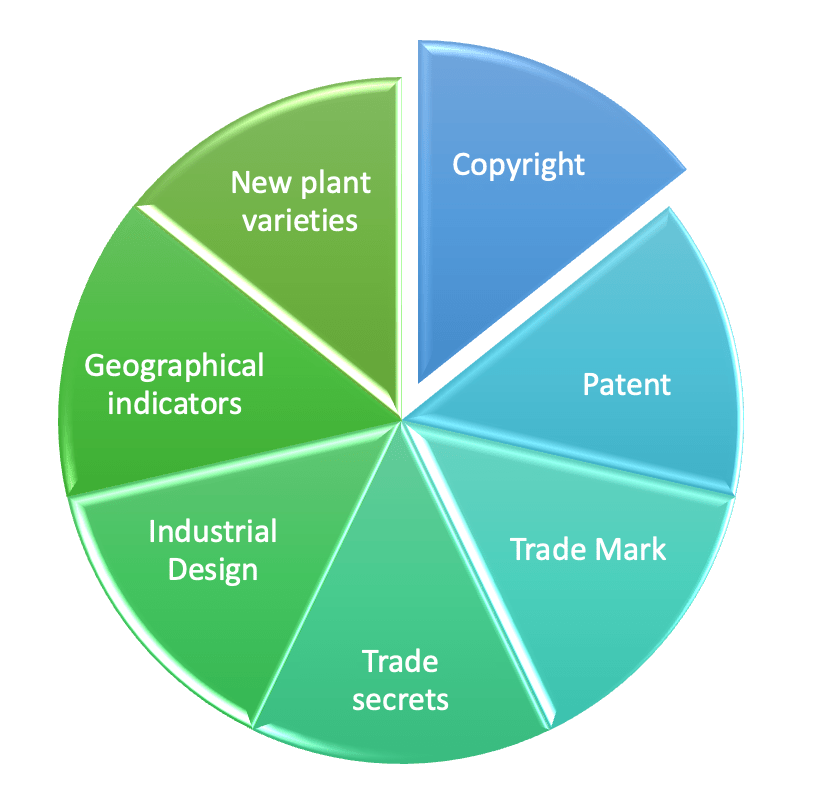
Intellectual Property Rights (IPRs)
Intellectual Property Rights (IPRs) are made up of a family of rights, the most common being copyright, patents and trade marks, though there are many others such as trade secrets, industrial designs, geographical indicators and so on. This series of blog entries will just skim the surface of this very complicated topic and give the reader a basic understanding of the types of IPRs.
Copyright
Copyright pertains to literary and artistic works that are original. Copyright therefore applies to novels, poems, plays, reference works, articles, computer programmes, databases, films, musical compositions, paintings, drawings, photographs and maps.
Patents
A patent is an exclusive right granted for an invention. For a patent to be granted there must be an inventive step. The invention must be a process or a product which invents a novel way of doing something or a novel technical way of solving a problem. The invention must be capable of industrial application.
This right grants the holder protection from having their invention used, manufactured or traded by unauthorised persons.
Trade marks
A trade mark is a sign capable of distinguishing the goods or services of one trader from those of other traders. Trade marked good and services refer to the, in local parlance, “brands” used by one entity or person to distinguish a good or service from others.
The US Patent and Trademark office indicates that a trademark:
- Identifies the source of your goods or services.
- Provides legal protection for your brand.
- Helps you guard against counterfeiting and fraud.
A quick word on Trade Secrets
Trade secrets refer to confidential information that may be sold or licensed. These secrets usually refer to commercial information such as recipes, business and manufacturing processes, client lists, suppliers lists, sales and advertising strategies. They may also refer to technical information such as computer programmes and test data.
To qualify as a trade secret, this information must be know to a limited number of persons and be commercially valuable. These persons must take all the necessary steps to keep this information secret.
Sources and useful links:
https://www.wipo.int/about-ip/en/
https://www.uspto.gov/trademarks/basics/what-trademark

 Phoenix Legal and Consulting Services