
International Women’s Day will be celebrated on March 8, 2022.
Many of you may be familiar with the term International Women’s Day and you may have even seen persons making speeches or having walkathons in celebration or observance of this day but you may like many others remain largely unfamiliar with its genesis and its purpose.
A Brief History
International Women’s Day (IWD as it’s known) grew out of the labour movement in the United States. It reportedly began in 1908, when 15,000 women marched through New York City demanding better working conditions and voting rights.
Clara Zetkin, the Leader of the ‘Women’s Office’ for the Social Democratic Party in Germany, is credited with making this movement international when she suggested the idea at the 1910 International Conference of Working Women in Copenhagen. The women attending this conference came from 17 other countries and agreed to adopt the idea. Thus in 1911 the very first international women’s day was observed in Austria, Denmark, Germany and Switzerland on 19 March. Clara, however, never suggested a set a date for the observance, this came much later in the decade, in 1917.
During World War I, on February 23, 1917, Russian women began a strike for “bread and peace” in response to the death of over 2 million Russian soldiers in the War. They continued their strike despite major political opposition, four days after they began their strike the Czar abdicated and the provisional Government granted voting rights to women. The date they began their strike was Sunday February 23 of the Julian calendar which was March 8 on the Gregorian calendar which was used in other countries. Thus the date for the celebration of International Women’s Day became March 8.
The United Nations (UN) began observing IWD in 1975. In December 1977, the UN General Assembly adopted a resolution proclaiming a United Nations Day for Women’s Rights and International Peace to be observed on any day of the year by Member States. The colours of IWD are purple, green and white.
The International Women’s Day website states that IWD is an official holiday in many countries including Afghanistan, Armenia, Azerbaijan, Belarus, Burkina Faso, Cambodia, China (for women only), Cuba, Georgia, Guinea-Bissau, Eritrea, Kazakhstan, Kyrgyzstan, Laos, Madagascar (for women only), Moldova, Mongolia, Montenegro, Nepal (for women only), Russia, Tajikistan, Turkmenistan, Uganda, Ukraine, Uzbekistan, Vietnam and Zambia.
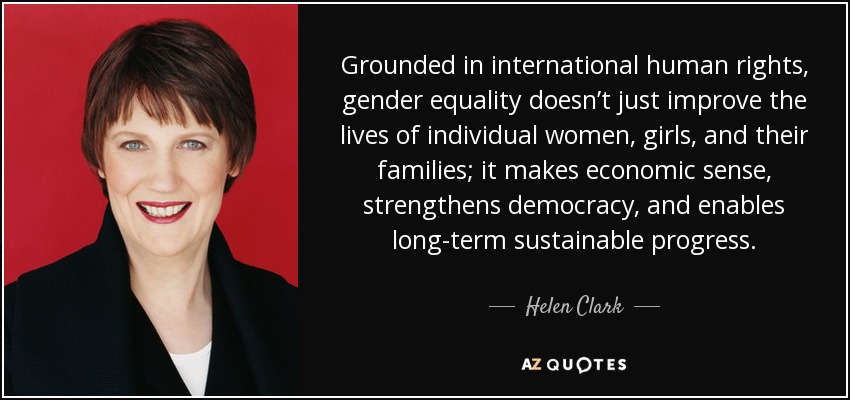
Why do we still need to observe and celebrate IWD?
International Women’s Day is a day celebrating the social, economic, cultural and political achievements of women. The day also marks a call to advocacy and action for accelerating gender parity.
Despite many prevailing opinions Gender equality has not been achieved internationally or locally. Women are still suffering from the effects of gender inequality despite the large gains over the past century. Women still receive unequal pay, are in fewer leadership positions, enjoy unequal access to education, healthcare, employment opportunities or training. Indeed, women are still more likely to become victims of violence and self harm due to poor body image. Women are also more likely to suffer from poverty especially if they are women of colour.
As if these issues were not enough the COVID-19 pandemic has pushed into the spot light issues of gender inequality present in our very own society. With the advent of the COVID-19 pandemic, the shadow pandemic (according to the UN) of increased violence against women and girls and domestic violence, has arisen at an alarming rate as women were now forced to be confined with their abusers due to the pandemic lockdowns and restrictions. The UNWomen reports that the Trinidad and Tobago Police Service Crime and Problem Analysis Division observed a “78% year-on-year increase in domestic violence reports between March and August 2020“. While the months of “May, June and July 2020 saw staggering upsurges of 113%, 149% and 132% respectively Trinidad and Tobago”.
The pandemic also brought along with it an economic pandemic which disproportionately affected women. Women were more likely to loose their jobs than men. Women were also more likely than men to have to continue working while shouldering a greater share of household duties and increased amounts of unpaid care work including homeschooling of children, cooking, cleaning and caring for sick and/or elderly relatives during the pandemic. UNWOMEN reports that 54% of women as opposed to 47% men saw an increase in unpaid domestic work while 46% of women as opposed to 35% men saw an increase in additional child care duties.
In the early days of the pandemic the IDB reported that 70% of households in Trinidad and Tobago reported reduced income. Women in the informal sector in a number of Caribbean countries were reported to have suffered from job loss more than men. UNWOMEN also reports that the percentage of households with incomes below the country-specific minimum wages spiked in Trinidad and Tobago by 35 percentage points. The enforcement of school closures, stay at home orders and lockdowns led to even greater reduction in income and further job losses by those in vulnerable industries (such as tourism, entertainment) and the informal sector.
Achieving Gender Equality requires the engagement of women and men, girls and boys. It is everyone’s responsibility.
Ban Ki-Moon
If nothing else, the foregoing points should illustrate the extent to which gender equality is still a work in progress. IWD provides an opportunity for our societies to step back and consider the state we find ourselves in and to examine what that remains to be done to move us closer to that illusive goal of gender equality.
The UN Sustainable Development Goals 2030, Sustainable Development Goal #5 Gender Equality, seeks to, inter alia, end all forms of discrimination and violence against women and girls, to ensure women’s full and effective participation and equal opportunities for leadership at all levels of decision-making in political, economic and public life, and to undertake reforms to give women equal rights to economic resources, as well as access to ownership and control over land and other forms of property, financial services, inheritance and natural resources, in accordance with national laws.
By celebrating IWD we also come closer to achieving the targets set under SDG5 by focusing in an incremental, progressive way on different aspects of the goal. Only sustainable action and consistent collaboration between governments, civil society and all citizens can contribute in a meaningful way to the achievement of the SDGs and the realisation of the ideals of IWD.
Sources:
https://togetherband.org/blogs/news/why-we-need-international-women-s-day
UNWOMEN Summary Status of Women and Men report – impacts of COVID-19

 Phoenix Legal and Consulting Services